
Degrees & Subjects
MBA Requirements: What Business Schools Ask For, Explained
MBA requirements at leading business schools follow a common pattern: a bachelor's degree, full-time work experience, a GMAT or GRE score, proof of English, essays, recommendations, a CV and an interview. No single item decides your result. Admissions committees read the whole file to judge three things: academic readiness, professional impact and clear goals.
By the Zenith Education team
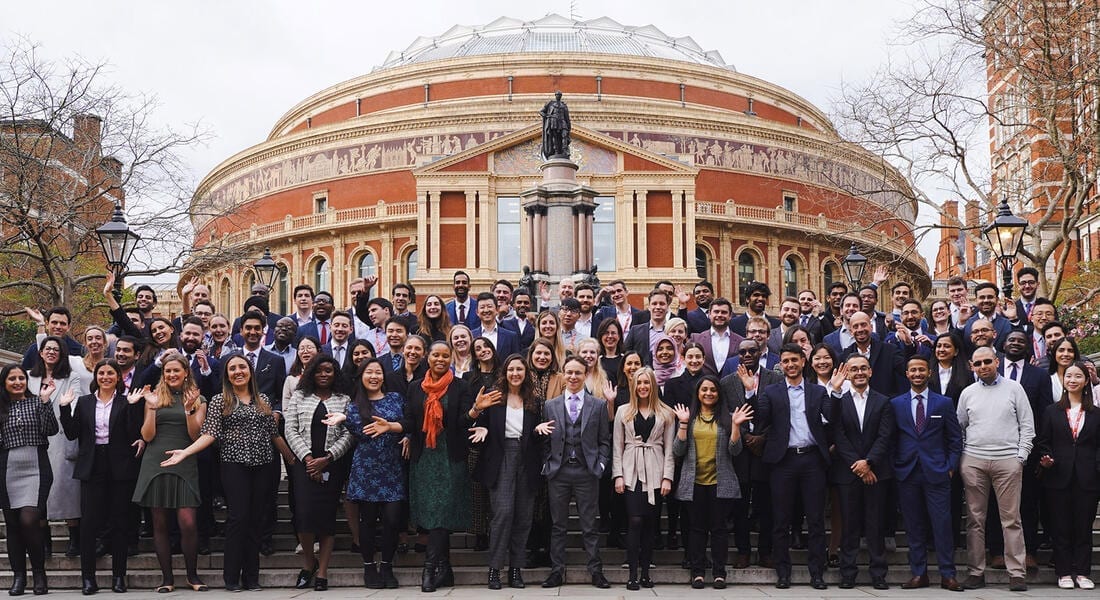
What are the standard MBA admission requirements?
Most full-time programmes in the US and Europe ask for the same core set. What changes from school to school is the format and the bar.
- A bachelor's degree in any subject. Only 22% of the Harvard Business School class that started in 2025 studied business; engineers, economists and scientists make up much of the rest.
- Work experience, full-time and after graduation. ESADE sets a minimum of two years and IE three, while averages at top schools are around five.
- A test score: the GMAT Focus Edition (scored 205 to 805), the GRE or, at some schools, the Executive Assessment or the school's own test.
- English proficiency if you are not a native speaker, often TOEFL iBT 100 or IELTS 7.0 at top schools.
- Essays or a motivation letter explaining your goals and why this school.
- One or two recommendations, ideally from people who have managed you.
- A CV, normally one page.
- An interview, by invitation only.
If your degree is not in business, the MBA prerequisites are fewer than you might expect.
How do schools weigh MBA application requirements?
Think of your file as answering three questions.
- Can you handle the coursework? Your grades, test score and any quantitative courses answer this. Wharton states that it has no minimum GMAT or GRE score. Published figures are medians, not cut-offs: Harvard's class entering in 2025 had a median GMAT Focus score of 685 and an average GPA of 3.76.
- What have you achieved at work? Schools look for progression, responsibility and results, not job titles. Two promotions in four years can say more than seven years in the same role.
- Why an MBA, and why now? Your essays, recommendations and interview show whether your goals are specific and whether this programme is the right bridge to them.
A weak area can be balanced by a strong one. A modest GPA is easier to overlook next to a high test score or a recent statistics course, and a shorter career reads well when the trajectory is steep.
MBA program requirements in the US and Europe
The building blocks are the same on both sides of the Atlantic, but the details differ.
European programmes are often shorter (INSEAD runs for one year, IE's International MBA for 11 months) and their classes are more international: around 90% of students at LBS and IE come from abroad, against 37% at Harvard.
Which MBA requirements matter most?
Scores open the door; your story decides. Among applicants who clear the academic bar, the deciding factors are usually the clarity of your goals and the evidence that you have had impact. That is why the strongest applications start with orientation: the industry and role you want after the MBA, then the skills you need, then the schools that teach them.
Give yourself six to twelve months for testing, school research, essays and recommendations. Prepare for the final stage too, by practising common interview questions for masters program applicants.
Frequently asked questions
Is there a minimum GMAT score in the MBA requirements of top schools?
Usually not. Wharton states that it has no minimum GMAT or GRE score, and most leading programmes take the same line. Published figures are medians or averages, such as 685 on the GMAT Focus at Harvard and about 615 at ESADE for recent classes. You can apply below the median if the rest of your file is strong.
Can you apply with the GRE instead of the GMAT?
Yes, at almost every major school. Harvard, Stanford and Wharton all accept either test, and 44% of the Harvard class that started in 2025 took the GRE. Some schools also accept the Executive Assessment, including Columbia and Darden, while IE and ESADE offer their own admissions tests.
Do international applicants face extra MBA admission requirements?
The core file is the same, plus proof of English if you are not a native speaker and did not study in English. At some schools, such as UCLA Anderson, working in English does not exempt you from the test. Transcripts not issued in English usually need an official translation.
Every profile meets these requirements in its own way. In a Strategy Call we look at your degree, career and goals, and help you decide which schools fit and when to apply. Apply for a Strategy Call
Next step
Applying for a master's or MBA?
We guide students applying to postgraduate programs worldwide, from choosing where to apply to submitting a strong application.
See master's and MBA guidanceWant to find out more?
Message us on WhatsApp for a quick answer, or book a free consultation. No pressure either way.