
Degrees & Subjects
How to Become a Doctor After High School: A Step-by-Step Guide
Becoming a doctor is one of the most ambitious and rewarding goals a student can pursue. It’s a journey that requires academic excellence, emotional resilience, and an unwavering commitment to helping others. But the road to becoming a doctor can also be overwhelming, especially for students just finishing high school who aren’t sure where to begin.
By the Zenith Education team
At Zenith Education, we aim to help students successfully navigate the process of applying to medical school, both in the UK and abroad. Whether you’re wondering what subjects to take, how to prepare for entrance exams, or what to expect during interviews — this guide is for you.
Let’s break down what it really takes to become a doctor; with advice you can use at every stage.
Start Preparing in High School

According to Serge Nader, CEO of Zenith Education, “Most successful applicants to medical school have been preparing since their early teens.” That means choosing science-heavy subjects and getting good grades is crucial from the very beginning. Chemistry and Biology are must-haves. Math is highly recommended, and Physics can give you an extra edge—especially if you’re considering other science-based options.
Schools using the IBDP or A Levels system usually look for Higher Level Chemistry and Biology. In the CBSE system, Chemistry, Biology, and Physics are essential, and sometimes Math is also expected.
And don’t forget about early qualifications. Your GCSE or Standard X scores still matter! Aim for strong grades in English and Math because they’re often required by UK universities.
Plan Your Subjects

Key subjects: Focus on biology, chemistry, physics, and mathematics. Taking advanced or honors classes in these areas will strengthen your transcript and help you get used to rigorous study habits.
Serge explains, “Your subject choices at ages 15–16 set the foundation for everything that comes after.” In IBDP, most medical schools expect HL Chemistry and HL Biology. Some schools, like Oxford, require only HL Chemistry, but recommend a second HL in Physics or Math. UK A Levels generally require A or A* in Chemistry and another science.
As for your other IBDP subjects, don't forget to include English and a second language, which are always good options! For the Individuals and Societies component, you can choose between Psychology or Business, depending on your interests. And for the sixth subject, you can go for an art, or you might decide to pick a second science at HL.
If you’re doing the CBSE board, focus on scoring above 80% in Chemistry, Biology, and Physics. Some international universities may be more flexible, but Indian schools are strict about subject requirements.
Age Requirement

You might be surprised to learn that some schools accept students as young as 17, and others don’t even have a minimum age requirement! However, for legal reasons, most medical schools prefer students to be 18 before they can start clinical work and hospital placements. Since some schools give you patient contact right from the first semester, they usually won’t admit anyone under 18 at the start of the academic year, like UCL and Imperial. If you find yourself in this situation, you may need to consider deferring your entry. But don't worry—some schools, such as King’s and Oxbridge, will accept students who turn 18 later in the academic year, as long as they don’t dive into clinical work right away.
Know What Medical Schools Expect

Medical school admissions teams typically look at four key things:
- Strong Grades – High scores in Biology and Chemistry (and often Math or Physics) are standard.
- Entrance Exams – Most medical schools (though not all) require an entrance exam, which tests your scientific knowledge as well as your critical thinking and decision-making skills. They vary by country. UK schools often require the UCAT (University Clinical Aptitude Test); U.S. schools ask for the MCAT (Medical College Admission Test); Indian colleges rely on the NEET exam.
- Work Experience – Spending time in hospitals or clinics—even shadowing—is crucial to demonstrate your commitment and give you a realistic idea of what the job involves.
- Extracurriculars – Activities that highlight leadership, resilience, compassion, and curiosity about medicine will help you stand out.
Understand the Medical School Application Process
Most students apply to medical school during their final year of bachelor's studies or after completing their degree. Here’s what the process typically includes:
• Admissions Test: In the U.S., this is the MCAT. In the UK, it’s the UCAT or BMAT. Other countries have their own versions.
• Transcripts and GPA: Academic performance still matters a lot. A high GPA, especially in science courses, will make you more competitive.
• Personal Statement: This essay allows you to explain your motivation, experiences, and suitability for medicine.
• Recommendation Letters: Usually from professors, advisors, or professionals who’ve supervised you in clinical or academic settings.
• Interviews: These range from traditional one-on-one interviews to MMI (Multiple Mini Interviews), where you rotate through different stations with various prompts.
This is where one of the most important questions comes up: Why do you want to become a doctor?
Mapping Out the Path: What Are the Options After High School?
There are three major pathways students can take to become doctors depending on where they plan to study:
A. UK and Ireland: Bachelor's Medical Degrees

- Duration: Typically 5–6 years.
- Entry is directly after high school (A-levels or equivalent).
- Requires science subjects, entrance exams (like UCAT/BMAT), and a strong personal statement.
B. US/Canada: Graduate Entry Only

- Students first complete a 4-year bachelor's degree (often in biology, chemistry, or related fields), then apply to medical school.
- Requires taking the MCAT, gaining clinical and research experience, and submitting multiple essays.
C. Europe, Asia, and Beyond: Direct Entry Available

- Countries like Italy, Hungary, Czech Republic, and even some Asian universities offer 6-year bachelor's medical degrees taught in English.
- Entrance exams vary and often test biology, chemistry, logic, and language skills.
Explore University Options
Medical school is offered all over the world. The UK, Ireland, Hungary, the UAE, and India are popular among international students.
• UK: Competitive and expensive, with limited international seats. However, schools like King’s College London and St. Mary’s in Twickenham are increasing international capacity.
• Ireland: Offers more international spaces and no UCAT requirement.
• Hungary & Czech Republic: Affordable tuition and English-language instruction.
• India: Over 700 colleges use NEET for admission. Preparation is intense and starts early.
• UAE: Increasingly popular for its proximity and modern medical facilities.
“Choosing the right medical school isn’t just about reputation,” says Serge. “It’s about finding a place where you’ll thrive academically and emotionally.”
Some students do well in competitive atmospheres, where pushing each other to excel is the norm. Others might feel overwhelmed in high-pressure situations and may prefer a more supportive environment. It's all about finding what suits you best!
Understand Entrance Exams

Each country has its own system:
• UK: UCAT (with sections like Decision Making and Situational Judgment). You only get one shot per year, and the test is taken in the summer before applying.
• India: NEET, a very competitive exam with 2+ million applicants. Requires extensive prep in Biology, Chemistry, and Physics.
• Europe: Entrance exams vary by school but are typically held locally and test science knowledge.
• U.S. and Canada: MCAT is the standard.
• UAE: Popular schools like GMU and MBRU use their own internal assessments.
We suggest beginning prep at least a year in advance, especially for exams like NEET or MCAT, which are academically rigorous.
Choose the Right Bachelor's Degree
Once you graduate from high school, your next step is completing a bachelor's degree. In most countries, you need a bachelor’s degree before applying to medical school.
Do you need a pre-med degree? Not necessarily. While many students choose biology or biochemistry, medical schools often accept students from a variety of academic backgrounds—as long as they complete the required science courses (like general chemistry, organic chemistry, biology, and physics). Some students study psychology, engineering, or even music, and still get into med school.
Serge explains: “What matters most is that you take your prerequisite courses, maintain a high GPA, and demonstrate a clear commitment to healthcare through your extracurriculars.”
Tip: Make sure your degree includes the courses required by the medical schools you’re aiming for. Each school can differ slightly, so double-check their admission requirements early.
Gaining Work Experience
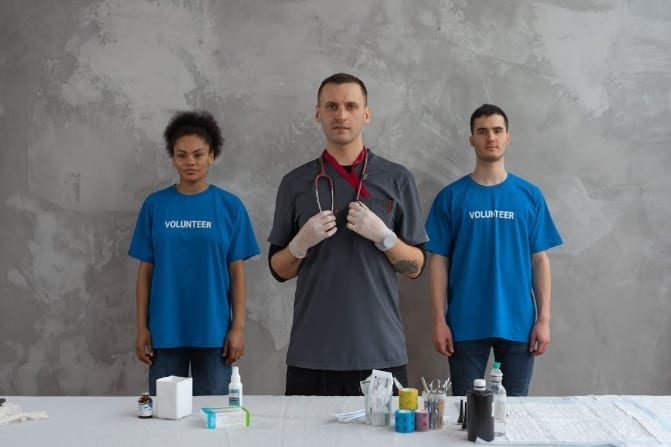
You’ll need to prove that you truly understand what being a doctor entails. This means shadowing doctors, volunteering at clinics, or taking on community service roles that involve working with people.
Don’t forget to explore experiences outside of observerships! Even volunteering at a clinic’s reception can give you valuable skills in interacting with patients. Once you get a taste of one area, don’t hesitate to ask if you can shadow someone else or even move to a different branch.
“Students should never underestimate the power of persistence,” reveals Serge. “We’ve had students who emailed 10 hospitals before they got one yes—but that one yes made all the difference.”
Can’t find in-person opportunities? Try virtual shadowing programs, webinars, and online courses related to healthcare.
Don’t Skip the Extracurriculars
What really counts are the qualities that show your commitment and passion for medicine. Think about empathy, compassion, resilience, communication skills, and strong decision-making. Oh, and don’t forget about professionalism and ethics, which are important too!
Join science or health-related clubs, volunteer at hospitals or clinics, and consider summer programs in medical science. These experiences don’t just look good on applications—they help you test whether medicine is the right path for you.
Admissions committees look for applicants who show initiative and passion outside of the classroom. Join school clubs, organize community health drives, or even start your own medical interest group.
Examples include:
• Leading a blood donation campaign
• Running a first-aid club
• Organizing a mental health awareness event
• Volunteering at clinics or nursing homes
• Participating in Model UN or student government
Go Beyond the Syllabus
Medical schools love students who dive deep into their interests. Consider:
• Extended essays in Biology, Chemistry, or Psychology
• EPQ for A Level students, focused on a healthcare topic
• Online courses (MOOCs) from universities like Harvard or Stanford
• Research internships (even unpaid ones
These show you’re truly curious and motivated.
Be Mindful of the Costs

Tuition fees vary widely:
• UK: Up to £53,400/year (UCL)
• Ireland: €60,000+
• Hungary: ~$16,000/year
• UAE: AED 150,000–160,000/year
• India: Public colleges are cheaper but extremely competitive
Unfortunately, scholarships for medicine are rare. “It’s seen as an investment in your future,” says Serge.
So, You Want to Be a Doctor: Start with Why
It’s important to pause and ask yourself a key question: Why do I want to become a doctor?
This might sound like a cliché, but it’s one of the first questions you’ll face on any medical school application or interview — and one of the hardest to answer authentically.
Serge puts it this way:
“Admissions teams don’t just want strong grades and a polished application. They want to understand your story — why medicine, why now, and why you?”
Why Do They Ask?
They want to know:
• Why Medicine? What’s your story? What led you here?
• What Inspires You? What motivates you beyond academics?
• Why You? Are your reasons authentic and personal?
Avoid clichés like “I want to help people.” Be honest and reflective.
How to Think About It
Instead of defaulting to general answers like “I want to help people,” reflect on experiences that shaped you. Did a personal or family health experience spark your interest? Were you drawn to biology or chemistry early on? Did volunteering at a clinic or caring for a loved one give you a deeper understanding of what doctors really do?
Ask yourself:
• What moments shaped your interest in medicine?
• Did a personal or family experience inspire you?
• What excites you about the career—science, human connection, problem-solving?
• What do you enjoy about science or healthcare?
• What do you hope to contribute to the world through medicine?
Structure Your Response

1. Start With Your Spark
Think about your experiences and how they shaped your journey. For some, it might be a family member in the medical field, or perhaps a personal experience with illness that highlighted the importance of a caring doctor. Others might be drawn in by a fascination with science or the human body. Consider what ignited your passion for medicine and reflect on the experiences that have shaped your path so far.
Sample Answer
“For me, the desire to pursue medicine started early, influenced by the examples I saw within my own family in Pakistan. Growing up, I looked up to several relatives who were deeply respected doctors—not just for their clinical expertise, but for the way they served their communities with compassion and dedication. I was especially inspired by how they balanced medical practice with meaningful social impact. Whether it was organizing free medical camps in rural areas or mentoring younger students in the field, they used their roles to make a tangible difference in people’s lives. Watching them showed me that medicine isn’t just about treating illness—it’s also about trust, leadership, and the responsibility to uplift those around you. That realization planted the seed for my own journey into healthcare.”
2. Show the Evolution of Your Interest
Talk about the steps you took to deepen your understanding of the field and the experiences that made you seriously consider a career in healthcare. For some applicants, the initial spark may come from a family connection to healthcare—but it’s important to show how that interest was explored and confirmed through personal experience. One student began their academic journey by studying biomedical sciences, driven by a curiosity about how science could directly improve lives. Over time, this evolved into a deeper commitment to healthcare, particularly after engaging with public health initiatives and learning how physicians can create real change in underserved communities.
Hands-on experience at community health camps helped broaden their understanding of the challenges faced by marginalized populations and emphasized the importance of cultural sensitivity and advocacy in medicine. To further prepare for the demands of medical school, the student pursued a master’s in human physiology and took a gap period to work and gain more exposure. During this time, involvement in health policy research offered insights into the broader systems shaping healthcare access.
To tie everything together, the student highlighted their experience as a clinical assistant in a general outpatient clinic, sharing a specific moment that underscored the emotional and human side of medicine—solidifying their commitment to becoming a doctor.
Example
"I began to understand the real-world impact of medical knowledge while volunteering at a mobile eye screening camp in a low-income neighborhood. One patient, a middle-aged man who worked as a tailor, had been experiencing gradual vision loss but hadn’t sought help because he thought it was just part of aging. During the screening, I observed how the medical team identified early signs of diabetic retinopathy and calmly explained the condition, its connection to unmanaged diabetes, and the importance of follow-up care. Seeing how the physician communicated complex information in a simple, respectful way—and how the patient’s fear turned into relief—showed me how critical a doctor’s role is in building trust and encouraging long-term health awareness."
Such experiences played a key role in reinforcing a strong commitment to the field of medicine, a passion that was clearly conveyed during the interview.
3. End with a Mission Statement
Wrap up by explaining what kind of doctor you want to become. Talk about your goals, whether it’s research, global health, underserved communities, or innovation. This will serve as your key takeaway for the interviewer about the kind of contributions you aim to bring to their medical school and the wider medical community.
Mission Statement
“Ultimately, I hope to become a physician who bridges the gap between medicine and innovation—someone who contributes to developing patient-centered technologies and systems that improve access and efficiency in care. I also aim to mentor future healthcare professionals, especially those from underrepresented backgrounds, and help shape a more inclusive and forward-thinking medical community.”
What to Avoid

• Listing your resume instead of telling a story
• Giving reasons based on status or salary
• Using overly generic or cliché answers
Instead, show how your values align with the profession—and why medicine is the path you’ve chosen over any other.
Final Thoughts
The road to becoming a doctor is long, but also one of the most fulfilling journeys you can take. Whether you end up studying in the UK, Hungary, Ireland, the UAE, or India, remember this:
• Start early and stay curious
• Ask for help when you need it
• Keep pushing—even if the route changes
And most importantly: do it because you care.
As Serge puts it, “The best doctors aren’t the ones with the highest grades—they’re the ones who understand why they’re doing it. If you hold onto your ‘why,’ you’ll always find your way.”
At Zenith, we’re here to support every step of your journey — from choosing your courses to writing your essays, preparing for interviews, and beyond.
Next step
Planning a bachelor's application?
We support students from the first "what should I study?" to the day they arrive on campus, with strategy, application expertise, and global university insight.
See bachelor's guidanceWant to find out more?
Message us on WhatsApp for a quick answer, or book a free consultation. No pressure either way.