
Degrees & Subjects
How to Study Medicine Straight After High School in the U.S.
Most people think that becoming a doctor in the U.S. means a long, complicated journey: four years of undergrad, then four years of med school, and then residency. And while that’s true for many, it’s not the only way.
By the Zenith Education team
Here’s the exciting part: If you’re a motivated high school student, there are two main ways to start your medical career in the U.S. and both are open to international students with the right preparation.
- Combined BS/MD or BA/MD programs: Direct-entry pathways that let you start med school right after high school, often with fewer hurdles and guaranteed admission (if you meet certain requirements).
- The traditional pre-med path: A flexible, widely-used route where you study any major in college while completing medical school prerequisites — then apply to med school after earning your bachelor’s degree.
Whether you’re aiming for a fast-track BS/MD program or planning a more flexible pre-med route, Zenith Education is here to help you build a strategy that fits your goals from high school to hospital.
What Is a BS/MD or BA/MD Program?

If you're dreaming of becoming a doctor and already know it's the right path for you, a BS/MD or BA/MD program might be your golden ticket. These are combined medical programs that allow you to complete both your bachelor's degree (Bachelor of Science or Bachelor of Arts) and your medical degree (Doctor of Medicine, or MD) in one continuous pathway—usually in 6 to 8 years total, depending on the school.
One Application, Two Degrees
The most unique part? You apply once, usually right after high school, and if accepted, you’re admitted into both the bachelor's and medical portions of the program. That means you don’t have to go through the stressful, competitive med school application process later on.
During the first few years, you'll complete your bachelor's coursework, which typically includes pre-med requirements (like biology, chemistry, and physics), plus general education and major-related classes. After that, you’ll transition directly into medical school, often within the same university.
No MCAT? In Many Cases, Yes!
Another major advantage? Many BS/MD programs waive the MCAT, the standardized test that most students must take to apply to medical school. Instead, you just need to maintain a certain GPA and meet other academic or behavioral requirements. Some programs may still require the MCAT, but often with a lower score threshold.
Why These Programs Are a Big Deal
Here’s why BS/MD and BA/MD tracks are so appealing to top students:
- No separate med school application: Skip the stressful cycle of writing essays, getting recommendations, and applying to dozens of schools later on.
- MCAT may be waived: Focus on learning, not just test prep.
- Guaranteed med school seat: As long as you meet the program's academic standards, your place in medical school is secure.
- Shorter timeline: Some programs take just 6 or 7 years, letting you become a doctor faster.
- Structured & supportive: You’ll often be part of a close-knit cohort with specialized advising, mentorship, and early exposure to healthcare environments.
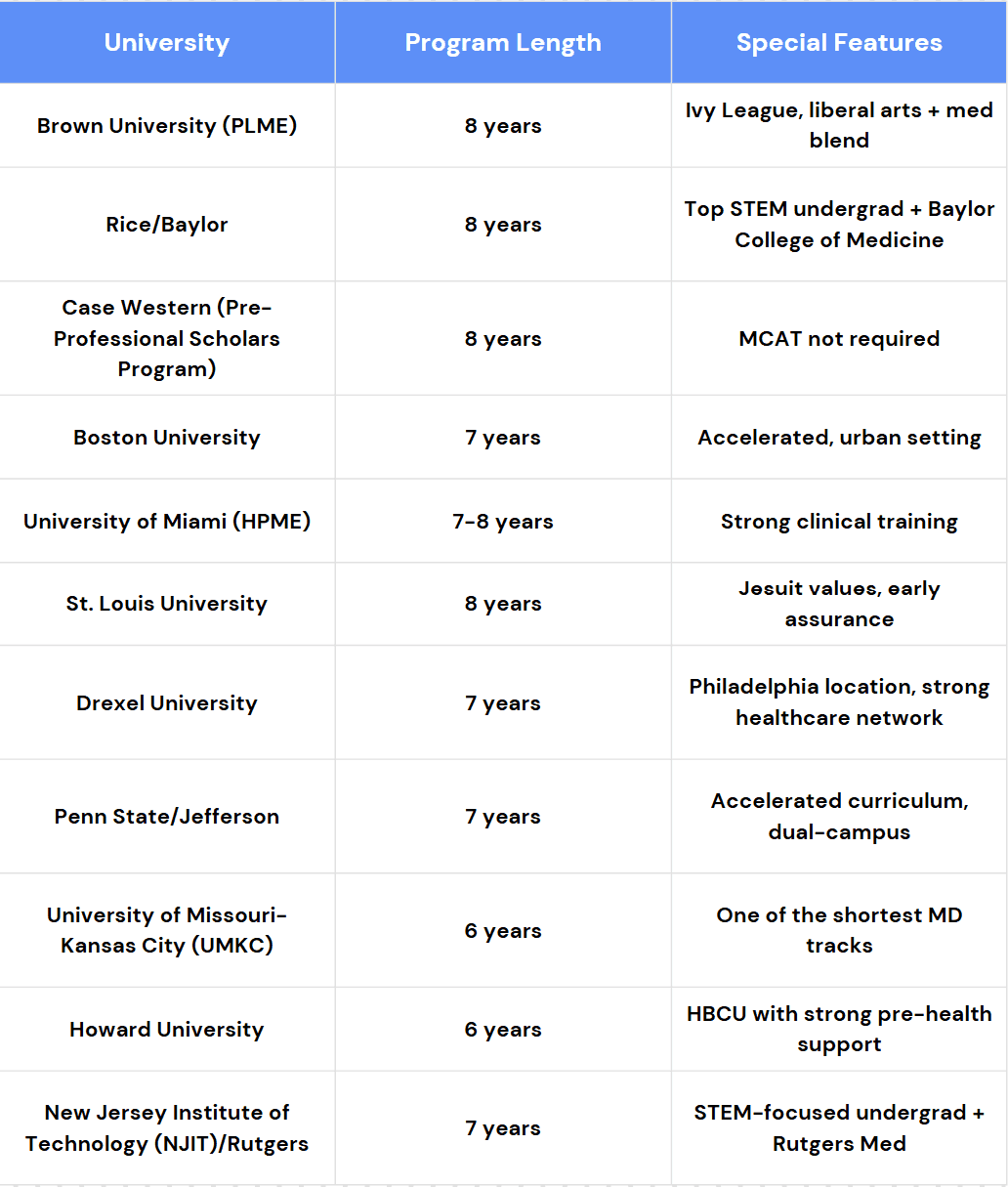
Top BS/MD & BA/MD Programs in the U.S.
Here are some of the most prestigious and competitive programs:
Can International Students Apply?
Yes — but it’s complicated.
Most BS/MD programs strongly prefer or require U.S. citizens or permanent residents, due to the competitive nature and limited funding.
However:
- Some programs (like Boston University, Case Western, and Drexel) have accepted a small number of international students in the past.
- You’ll need excellent grades, high standardized test scores, and ideally some U.S.-based experience (like a summer program or volunteer work).
- Be prepared to pay full tuition unless you win scholarships.
Tip: If you’re international, you can still consider pre-med + MD paths via traditional undergrad entry (more on that below).
What If You Don’t Get Into a BS/MD Program?
If you don’t get into a BS/MD program or if you’re not eligible as an international student, don’t worry. Most doctors in the U.S. follow the traditional pre-med route, which is still accessible, respected, and achievable with the right planning.
Step 1: Complete a Bachelor’s Degree (4 years)
- You must have a 4-year bachelor's degree before applying to medical school in the U.S.
- There’s no official “pre-med major.” You can major in anything (biology, psychology, even art!) as long as you complete the required pre-med courses.
Typical Pre-Med Course Requirements:
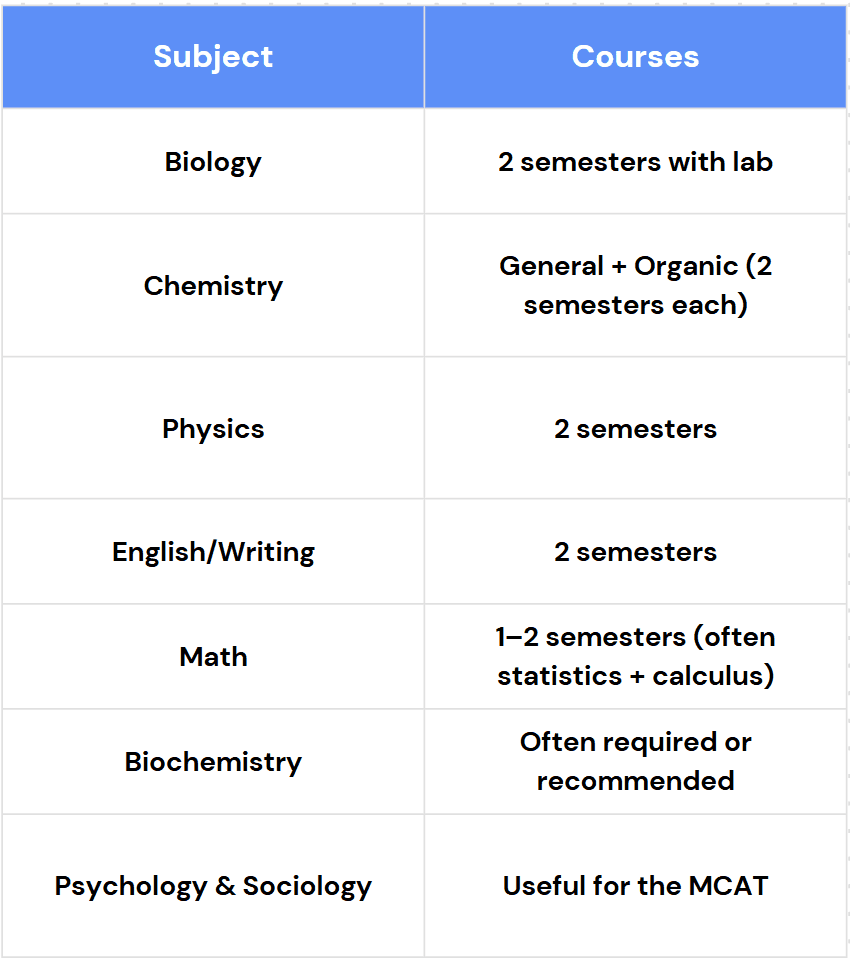
You’ll also want to get involved in research, clinical volunteering, shadowing, and leadership activities during college.
Step 2: Take the MCAT
The MCAT (Medical College Admission Test) is a standardized test required for nearly all U.S. med schools.
- Sections:
- Biological & Biochemical Foundations
- Chemical & Physical Foundations
- Psychological & Social Foundations
- Critical Analysis and Reasoning Skills (CARS)
- Scored from 472–528, with 510+ considered competitive
International Tip: You'll need strong English reading skills for CARS, and a deep understanding of American-style science education. Prep takes 3–6 months on average.
Step 3: Apply to Medical School (via AMCAS)
Most U.S. medical schools use the AMCAS system (like UCAS but for med school). You apply during the summer after your third year of university (junior year), and start med school the following fall.
You’ll need:
- MCAT scores
- GPA (U.S. GPA system; ideally 3.6–4.0)
- Transcripts
- Personal Statement
- Experience section (clinical work, shadowing, research, service)
- Letters of Recommendation (especially from science professors)
- Optional: Secondary essays for each med school
International students may also need:
- TOEFL or IELTS
- A student visa (F-1)
- Proof of ability to pay (as most med schools don’t offer aid to non-citizens)
Step 4: Attend Medical School (4 years)
Once accepted, you begin your Doctor of Medicine (MD) or Doctor of Osteopathic Medicine (DO) degree.
Structure:
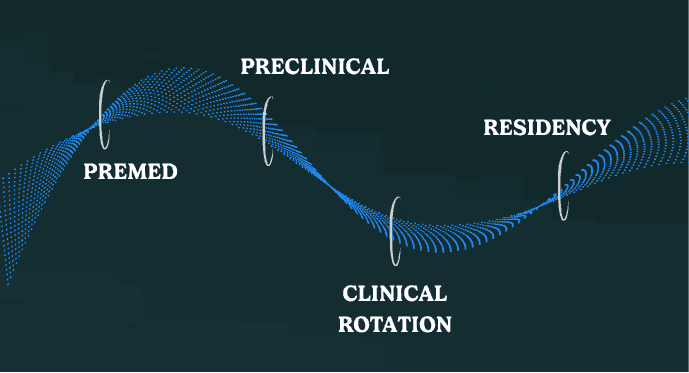
Years 1–2: Preclinical Phase These years are mostly classroom-based, where you’ll dive deep into the foundations of medicine—think anatomy, physiology, pathology, pharmacology, and medical ethics. Some programs may also include early hands-on experiences, like patient simulations or clinical shadowing, to help you start thinking like a doctor from day one. Years 3–4: Clinical Rotations Here’s where it gets real! You’ll rotate through different hospital departments, including internal medicine, surgery, pediatrics, psychiatry, obstetrics/gynecology, and more. These hands-on experiences help you apply what you’ve learned and figure out which specialty might be right for you.
During these years, you’ll also take two major licensing exams:
USMLE Step 1, usually after year 2, tests your understanding of basic sciences (now pass/fail). USMLE Step 2 (CK), typically taken in year 4, focuses on applying medical knowledge to clinical scenarios. Students in DO programs take COMLEX exams instead, which include similar content plus osteopathic principles.
These exams are important milestones and play a key role in your future residency placement, the next stage of your medical training after graduation.
Step 5: Residency (3–7 years)
After med school, you enter residency training, where you work in a hospital under supervision. This is where you specialize in your field (e.g., pediatrics = 3 years, surgery = 5+ years).
Residency is extremely competitive, especially for international medical graduates (IMGs) but U.S.-educated international students have a much better match rate.
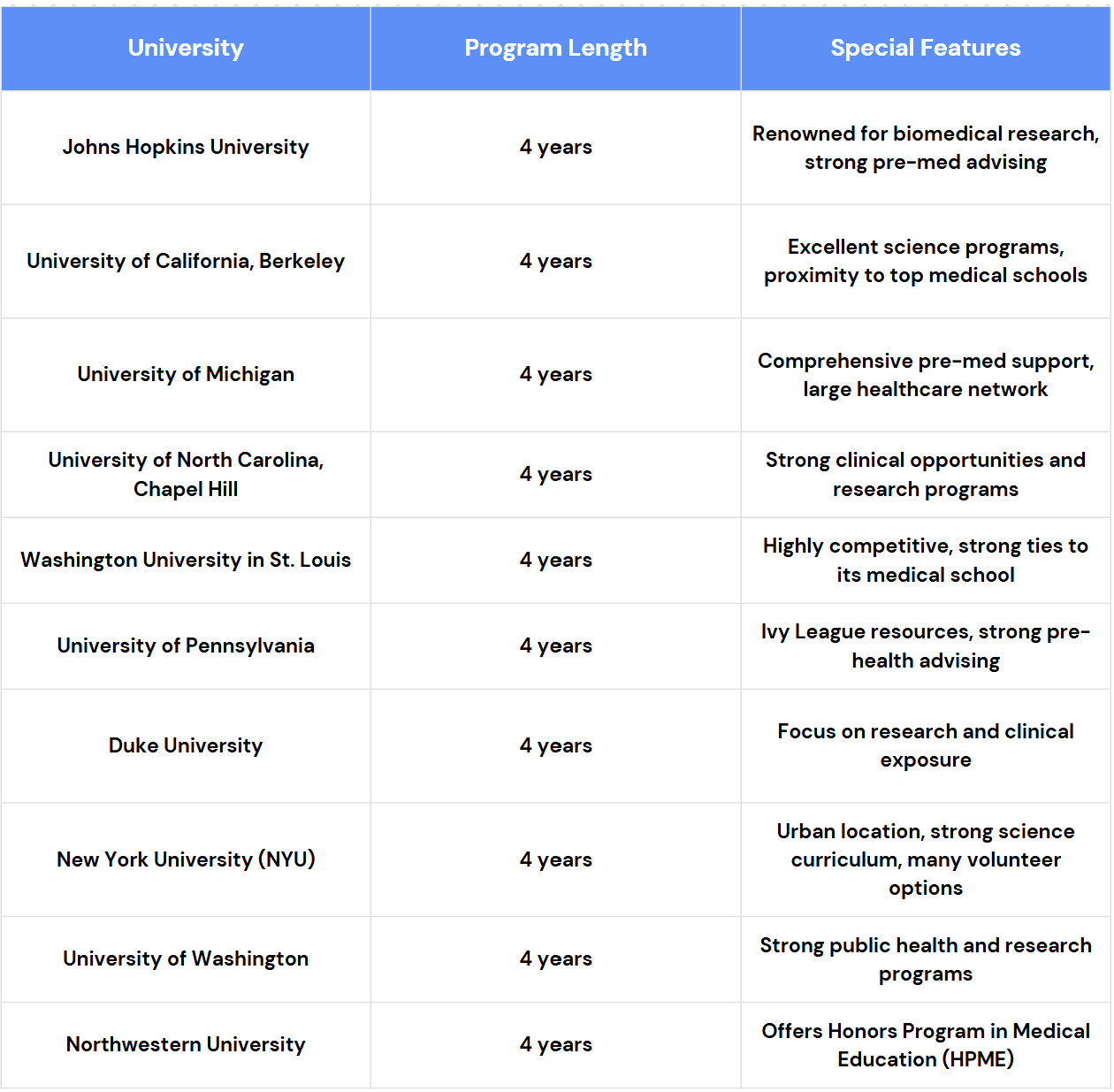
Top Traditional Pre-Med Bachelor's Schools in the U.S.
Special Notes for International Students
- Only a small number of U.S. med schools accept international applicants (around 40–50 out of 150+)
- Many require upfront proof of full funding for 4 years (can be $300,000+)
- You’ll need an F-1 visa, and post-grad, you must secure residency to practice in the U.S.
- Schools like Harvard, Stanford, Yale, Duke, and Johns Hopkins have accepted international med students in the past, but the competition is intense.
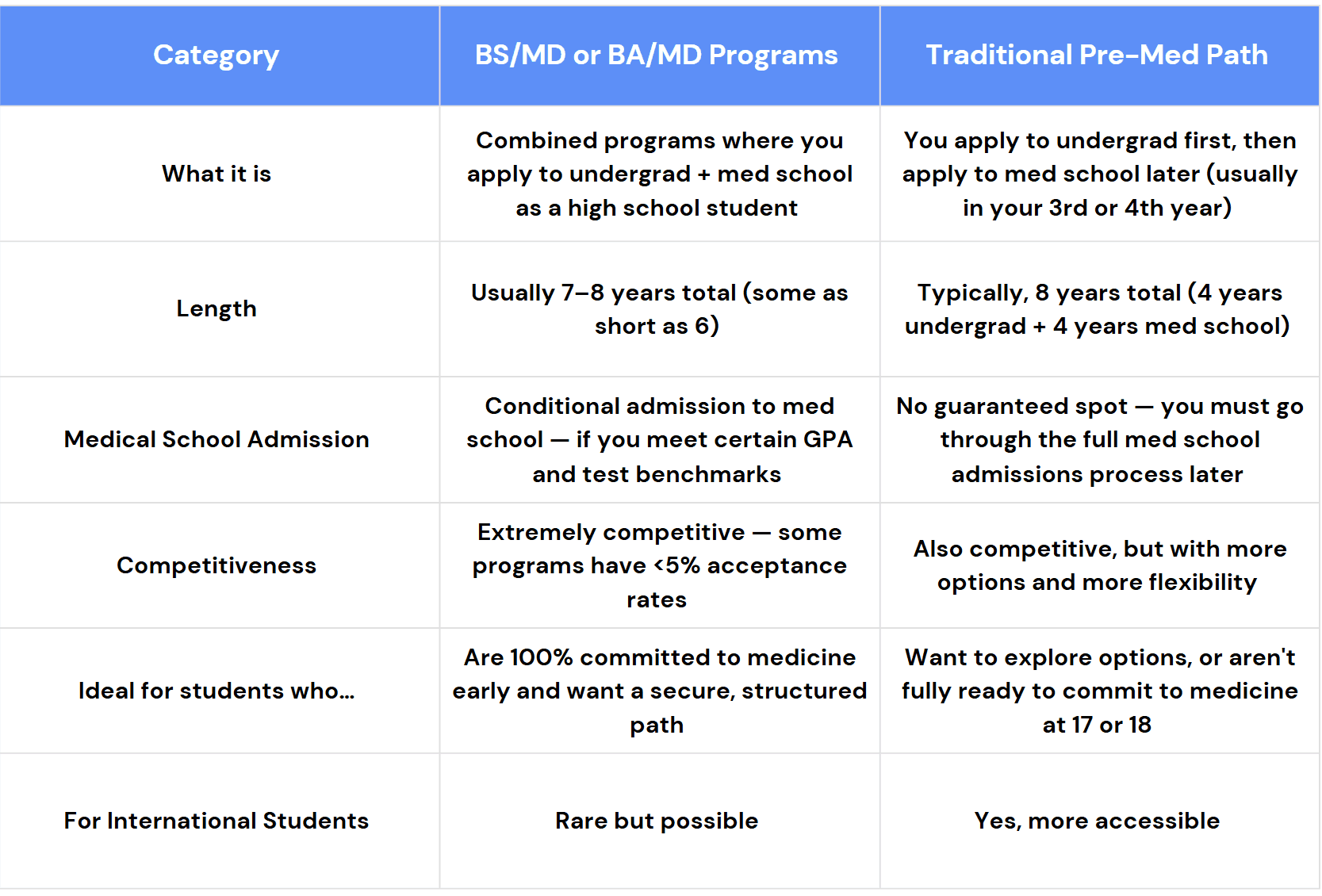
BS/MD vs. Traditional Pre-Med: What’s the Difference?
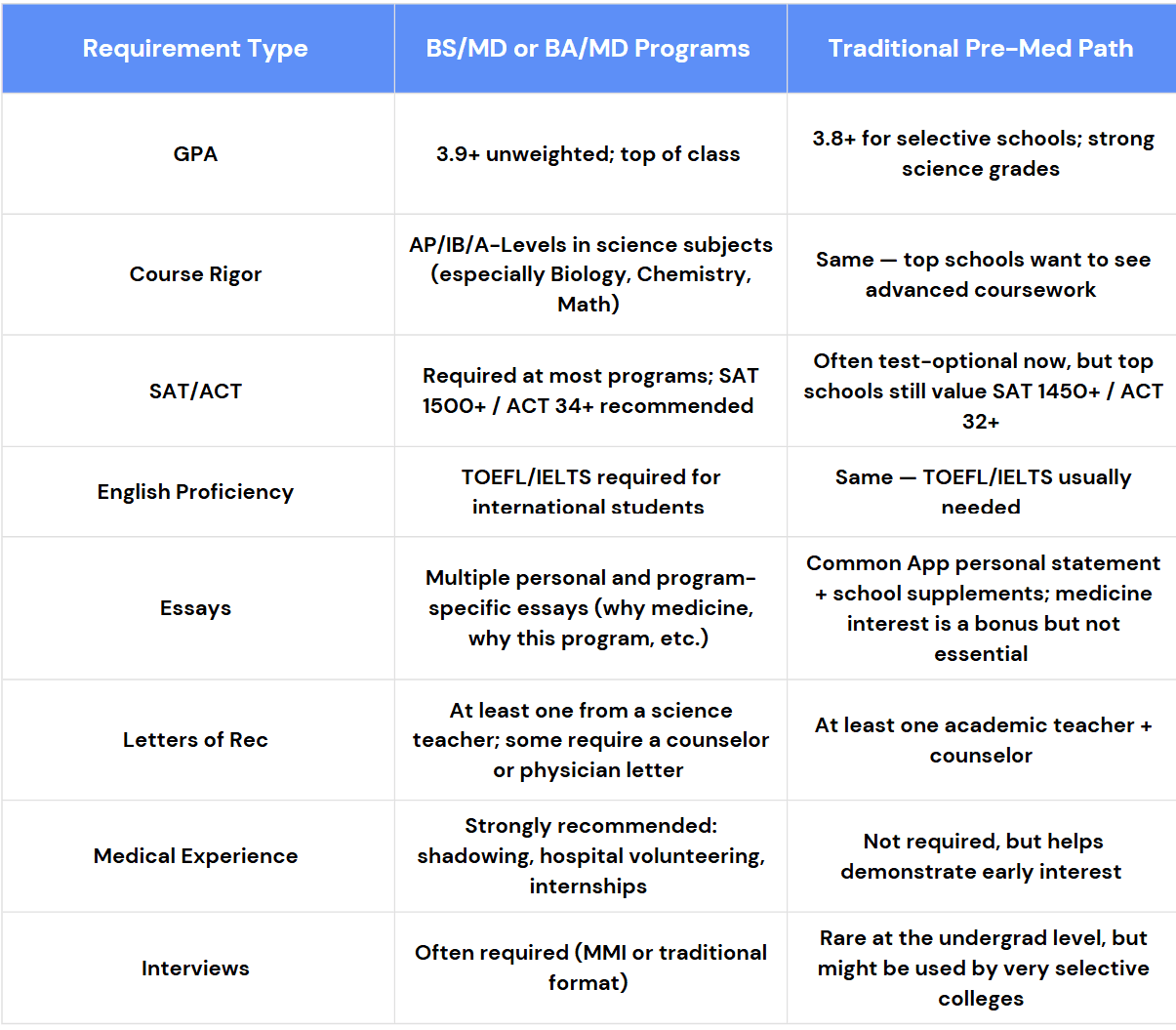
Admission Requirements
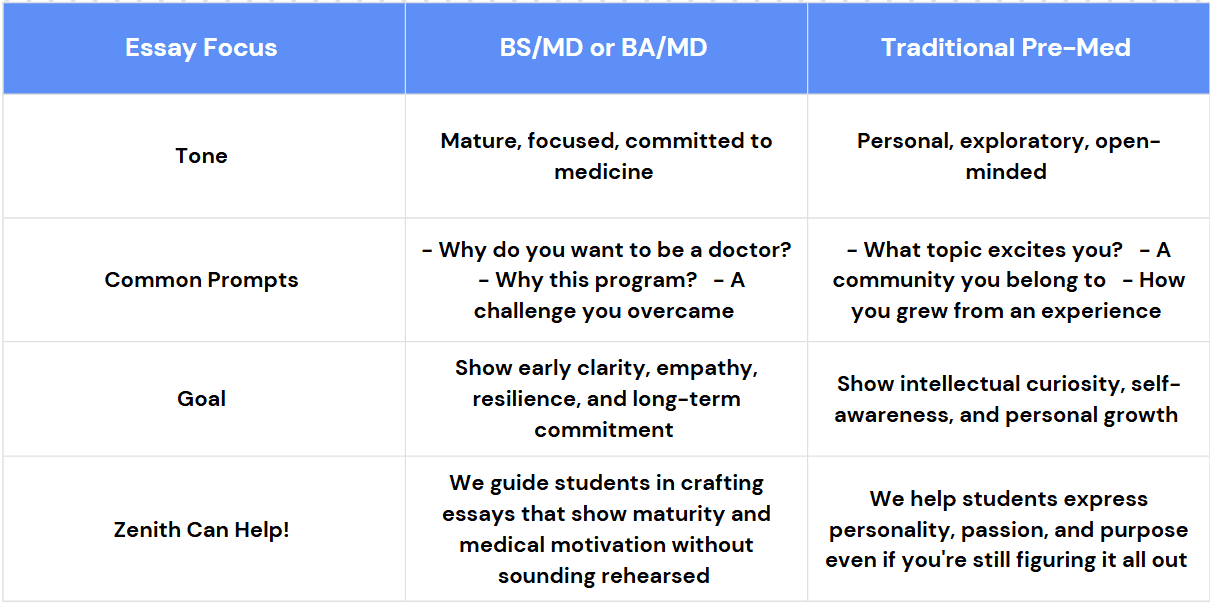
Essays: Where You Show Who You Are
Final Thoughts — And How Zenith Education Can Help
Whether you're aiming for a BS/MD program or following the more traditional pre-med path, the key to success is early and strategic planning, especially if you’re applying from outside the U.S.
The traditional route offers more flexibility and is often the most reliable option for international students. But it also comes with challenges, including competitive academics, standardized testing, and navigating visa and financial requirements.
That’s where Zenith Education comes in.
We support international students every step of the way by helping you:
- Identify U.S. universities that are pre-med friendly and accept international applicants
- Plan the right high school and college course schedules
- Prepare for essential exams like the SAT/ACT, TOEFL/IELTS, and eventually the MCAT
- Build a standout resume and write compelling essays
- Craft a winning strategy for BS/MD applications, including interview
- Understand and navigate student visa processes and funding options
From your very first step to your med school admission, Zenith Education is here to help you bring your dream of studying medicine in the U.S. to life.
Next step
Planning a bachelor's application?
We support students from the first "what should I study?" to the day they arrive on campus, with strategy, application expertise, and global university insight.
See bachelor's guidanceWant to find out more?
Message us on WhatsApp for a quick answer, or book a free consultation. No pressure either way.