
Degrees & Subjects
How to Study Law in the U.S.
If you're an international student dreaming of becoming a lawyer in the United States, you might be surprised to learn that you can’t study law directly after high school — at least, not in the traditional sense. The U.S. legal education system follows a very different path compared to countries like the UK, France, or Italy.
By the Zenith Education team

But don’t worry — we’ll walk you through every option, including the traditional JD route, combined programs, and alternative legal careers you can start earlier.
The Traditional Path to Becoming a Lawyer in the U.S.
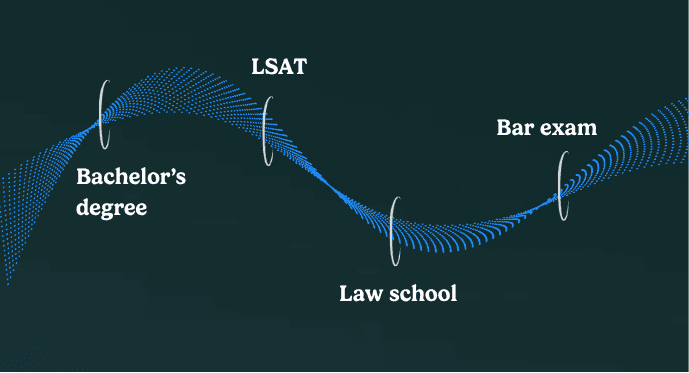
Unlike many countries where you can begin law studies straight out of high school, becoming a lawyer in the United States is a multi-step journey that begins with a university degree and culminates in a professional license. Here’s how it works:
Step 1: Earn a Bachelor’s Degree (4 Years)
In the U.S., law school is a graduate degree, meaning you need to first complete a bachelor's degree. There’s no specific “pre-law” major required — U.S. law schools welcome students from a wide variety of academic backgrounds.
What You Should Know:
- Popular Majors: Political Science, History, English, Philosophy, Economics, Sociology, or even STEM fields like Engineering or Biology.
- No Pre-Law Requirement: Some universities offer a pre-law advising track, but it's not mandatory or even preferred.
- What Law Schools Look For: A strong academic record (aim for a GPA of 3.7 or higher for top-tier schools), evidence of critical thinking, writing skills, and leadership experience.
- Activities That Help:
- Join debate or Model UN
- Volunteer or intern with legal aid organizations or local law firms
- Write for your school newspaper or law society
- Take challenging courses that develop research and argumentation skills
Step 2: Take the LSAT or GRE
The LSAT (Law School Admission Test) is the main test required for law school admissions. Some schools now accept the GRE as well.
LSAT Overview:
- Sections include Logical Reasoning, Analytical Reasoning (logic games), Reading Comprehension, and a writing sample.
- Scored between 120–180. Competitive schools want 165+.
- Offered multiple times a year.
Step 3: Apply to Law School (JD Program - 3 Years)
Once you have your bachelor's degree and LSAT score, you can apply to a Juris Doctor (JD) program — the standard degree required to become a licensed lawyer in the U.S.
Application Essentials:
- Transcripts from your bachelor's university
- LSAT/GRE score
- Personal statement (often a 2-page essay about your motivations, background, or challenges)
- Letters of recommendation (typically from professors or internship supervisors)
- Résumé outlining academic and extracurricular achievements
Top U.S. Law Schools:
- Harvard Law School
- Yale Law School
- Stanford Law School
- Columbia Law School
- NYU School of Law
- University of Chicago
- UC Berkeley School of Law
- University of Pennsylvania Carey Law School
- University of Michigan Law School
- Duke University School of Law
Most JD programs take 3 years to complete. During your time in law school, you’ll take courses in:
- Contracts, Torts, Constitutional Law
- Criminal Law, Civil Procedure
- Legal Writing & Research
- Electives like International Law, Human Rights, Corporate Law
Law school is academically intense and emphasizes case analysis, Socratic discussion, legal writing, and summer internships ("clerkships").
Step 4: Pass the Bar Exam (and Get Licensed)
After earning your JD, you must pass the bar exam in the state where you want to practice law. Each state has its own bar, but many follow the Uniform Bar Exam (UBE).
Key Facts:
- Exam Structure: Usually includes essay questions, multiple-choice (the MBE), and performance tests simulating real-world legal tasks.
- Uniform Bar Exam (UBE): Accepted in 41+ U.S. jurisdictions; allows “score portability” between states.
- Character Review: You must pass a background check and demonstrate ethical conduct.
- Bar Review Prep: Most graduates take an intensive 2–3-month prep course after law school to prepare.
After passing the bar and receiving your license, you can begin working as a lawyer, either in private practice, public service, corporations, or international organizations.
Can You Study Law After High School in the U.S.?
Not directly — but there are combined or accelerated programs for high-achieving high school students.
BA/JD or 3+3 Accelerated Programs: A Fast Track to Your Legal Career

For highly motivated students who want to save time and jumpstart their legal careers, many U.S. universities now offer “3+3” accelerated programs. These innovative pathways combine bachelor's and law school studies into a seamless, 6-year plan — shaving off an entire year compared to the traditional 7-year path!
What Are 3+3 Programs?
Instead of spending four years completing a bachelor’s degree and then three years in law school, you spend:
- 3 years completing bachelor's coursework
- 3 years in law school
You apply to the bachelor's program with conditional acceptance to the affiliated law school, so you don’t need to reapply separately to law school after your undergrad.
How It Works
- You spend your first 3 years completing most of your bachelor’s degree requirements (usually around 90 credit hours).
- During your junior year, if you meet academic and testing benchmarks, you transition directly into the law school for your final 3 years.
- Once you complete the full program, you earn both a Bachelor’s degree and a Juris Doctor (JD) degree.
Benefits of 3+3 Programs
- Save Time: Finish your law degree a whole year faster — start your career sooner!
- Cost Savings: One less year of tuition and living expenses.
- Less Stress: Skip the uncertainty of a separate law school application process.
- Focused Path: Early commitment helps you plan your courses and extracurriculars with law school in mind.
- Support: Access to advising and mentoring tailored to accelerated law students.
Popular 3+3 Program Examples
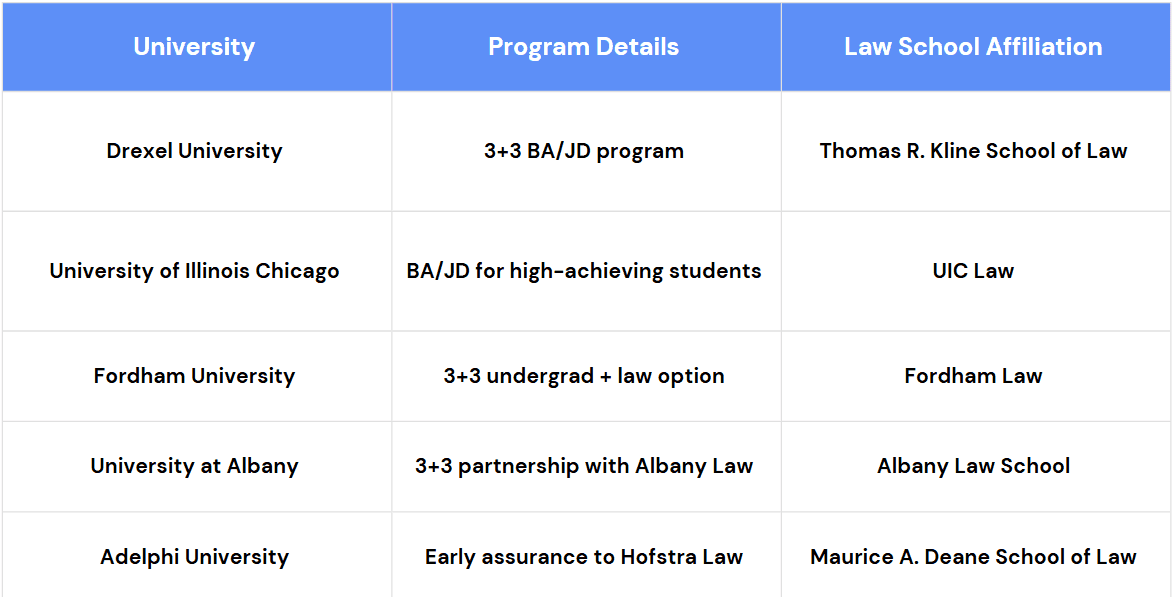
Who Can Apply?
- U.S. Citizens and International Students on F-1 visas
- High school graduates with excellent academic records and strong extracurriculars
- English Proficiency: TOEFL or IELTS scores are usually required for international students to prove language ability
- Academic Requirements: Must maintain a minimum GPA (often around 3.3–3.5) during undergrad years
- Testing Requirements: Some programs require you to take the LSAT during your undergrad studies, while others may waive it or offer conditional admission based on GPA and coursework.
What About International Students?

If you’re an international student with a foreign high school diploma, here’s what you need to do:
- Apply for bachelor's studies in the U.S.
- Choose a major you're passionate about (pre-law is optional)
- Build a strong academic and extracurricular profile
- Take the LSAT in your 3rd or 4th year of college
- Apply for JD programs as a graduate student
English Proficiency Required:
- TOEFL iBT: 100+
- IELTS: 7.0+
Some universities offer international-specific support, especially in cities like New York, Boston, and LA.
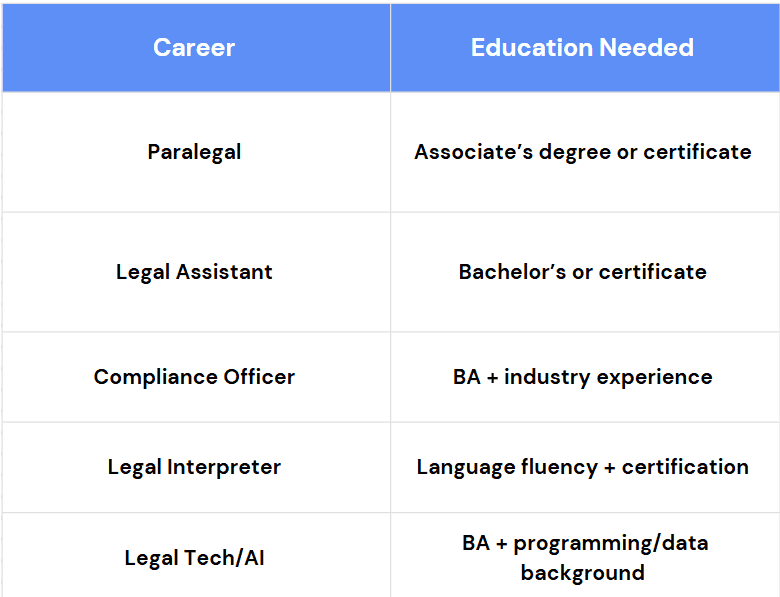
Alternative Legal Careers (Without a JD)
If you're more interested in law-adjacent fields, here are options that don’t require a JD:
Final Thoughts
Although the U.S. path to becoming a lawyer is different from many countries — requiring a bachelor’s degree before law school — there are smart, accelerated options like 3+3 programs that help ambitious students fast-track their legal careers.
Whether you’re an international student navigating a new education system or a local student planning your future, the key is to start preparing today. From choosing the right bachelor's program and mastering the LSAT, to crafting standout applications and exploring alternative legal careers — the journey might seem complex, but you don’t have to do it alone.
At Zenith Education, we specialize in guiding students like you through every step — providing expert advice, personalized support, and strategies to help you stand out in one of the most competitive fields out there.
Next step
Planning a bachelor's application?
We support students from the first "what should I study?" to the day they arrive on campus, with strategy, application expertise, and global university insight.
See bachelor's guidanceWant to find out more?
Message us on WhatsApp for a quick answer, or book a free consultation. No pressure either way.