
Degrees & Subjects
How to Study Medicine Straight After High School in the UK
Studying medicine in the UK straight after high school is a dream for many students around the world! The UK is home to some of the most prestigious medical schools, and they offer a welcoming pathway for both local and international students. If you’re feeling a bit overwhelmed by the admissions process, not sure which exams to take, or wondering which universities to consider, Zenith Education is here to help! This guide will lead you every step of the way.
By the Zenith Education team

Why Choose to Study Medicine in the UK?
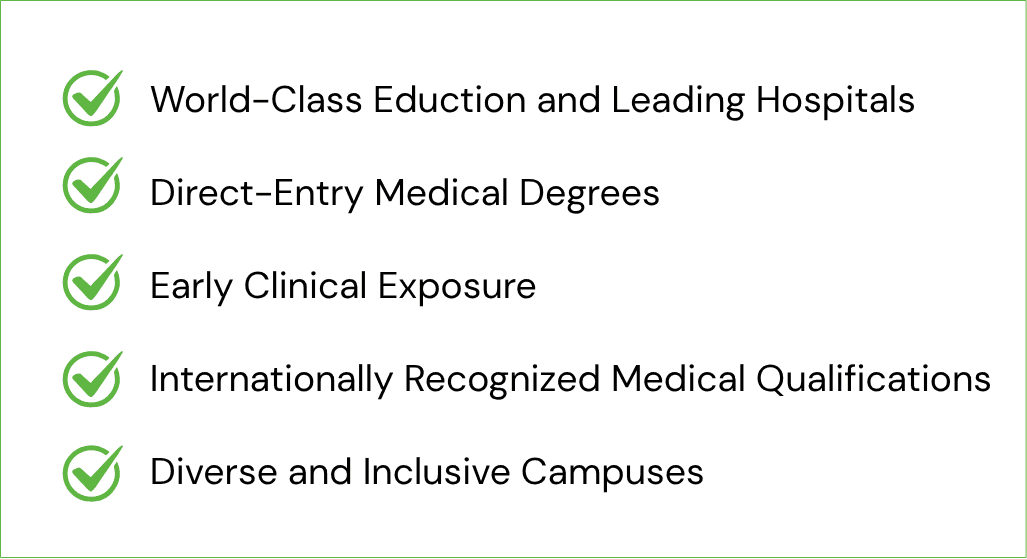
Studying medicine in the UK offers a unique and highly rewarding experience that combines academic excellence with practical training in some of the world’s best healthcare settings. Here’s why so many aspiring doctors from around the globe choose the UK as their destination:
World-Class Education and Leading Hospitals The UK is home to some of the most prestigious medical schools and teaching hospitals in the world. Universities like Oxford, Cambridge, and Imperial College London offer cutting-edge research opportunities and top-tier faculty, while affiliated hospitals provide hands-on clinical training that is second to none. This blend ensures you gain both the knowledge and practical skills needed to become an outstanding doctor.
Direct-Entry Medical Degrees — Start Your Journey Early Unlike some countries where you first complete a separate bachelor's degree before medical school, the UK offers direct-entry medicine programs that usually last 5 to 6 years. This streamlined path means you can focus fully on your medical training right after finishing secondary school, saving you time and helping you enter the workforce sooner.
Early Clinical Exposure — Learn by Doing One of the strengths of UK medical education is the strong emphasis on clinical experience from the very beginning. You won’t just be stuck in lecture halls; you’ll start interacting with patients, shadowing doctors, and practicing essential clinical skills early on. This practical approach prepares you for the realities of a medical career and helps develop your confidence and bedside manners.
Internationally Recognized Medical Qualifications A medical degree from the UK is recognized worldwide, opening doors for graduates whether they want to practice medicine in their home countries, stay in the UK, or move elsewhere. This global recognition ensures your hard-earned qualification carries significant weight wherever your career takes you.
Diverse and Inclusive Campuses UK medical schools attract students from all corners of the globe, creating vibrant multicultural communities. Studying alongside peers from different cultures enriches your learning experience and prepares you to work in diverse healthcare environments. Many universities also have dedicated support services for international students to help you settle in smoothly and thrive both academically and personally.
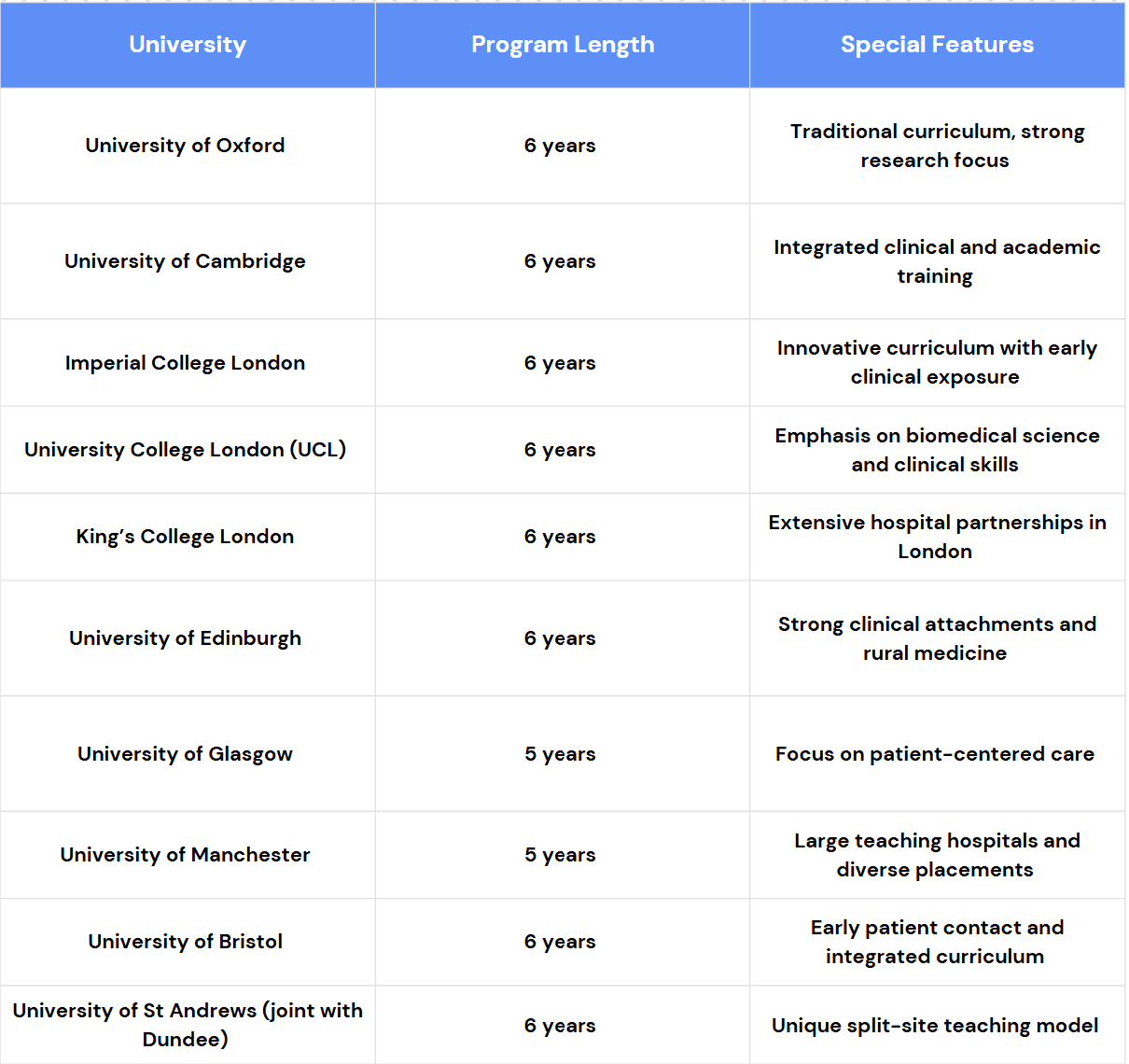
Top Medical Schools in the UK: Your Options at a Glance
How Does the UK Medical School Admission Process Work?
Applying to study medicine in the UK is exciting but highly competitive. Knowing each step inside out will give you a huge advantage. Let’s break down the entire journey in detail, so you know exactly what to expect and how to prepare!
Your First Big Step: Submit Your UCAS Application

The first and essential step for all UK medical applicants is to apply through UCAS, the UK’s centralized university application system. Unlike many other courses, medicine applicants can apply to up to four medical schools only (instead of the usual five).
- When to Apply: UCAS opens for applications in early September each year, but the deadline for medicine is earlier than most courses — usually mid-October. Missing this deadline means your application likely won’t be considered, so plan carefully and start early!
- What to Prepare: Your application will require:
- A personal statement where you passionately explain your motivation for medicine, your relevant experiences, and your personal qualities. This is your chance to show the admissions tutors who you are beyond your grades.
- Academic records such as predicted or achieved grades from your current or previous studies.
- A reference letter from a teacher or mentor who knows your academic ability and character well, as this helps confirm your readiness and suitability for medicine.
Your UCAS application acts as your first impression, so make sure your personal statement is honest, reflective, and tailored specifically to medicine. Generic statements won’t cut it here!
Prove You’ve Got the Skills: Ace the Entrance Exams
Nearly all UK medical schools require one or more entrance exams designed to test the skills that are crucial for future doctors. These tests go beyond academic knowledge and focus on reasoning, problem-solving, and ethics.
- UCAT (UK Clinical Aptitude Test): The most commonly used test, assessing verbal reasoning, quantitative reasoning, abstract thinking, decision making, and situational judgment. The UCAT is designed to measure your ability to think critically under time pressure; it’s not about memorizing facts.
- BMAT (Biomedical Admissions Test): Required by a smaller number of prestigious universities such as Oxford, Cambridge, and Imperial College London, BMAT combines multiple-choice questions on problem-solving, scientific knowledge, and a written essay component. It demands a strong grasp of science and the ability to apply knowledge logically.
- GAMSAT (Graduate Medical School Admissions Test): This test is primarily for graduate-entry medicine courses and is less commonly needed for school leavers. It tests reasoning in humanities, social sciences, biological, and physical sciences.
If you’re applying from overseas, these exams are available globally at authorized testing centers, but availability can be limited and spots fill quickly, so booking early and starting your preparation well ahead is absolutely crucial.
Show Your Academic Excellence: Meet the Academic Requirements

Medical schools expect strong academic performance, particularly in sciences, as medicine is demanding and requires a solid foundation.
- You will usually need A-levels in biology and chemistry, sometimes also physics or mathematics, depending on the school’s requirements.
- Offers are highly competitive, commonly requiring grades like AAA to A*AA. This means you must perform at the top of your class.
- For students following the International Baccalaureate (IB), universities often look for a total score of 38 points or more, with high marks specifically in higher-level science subjects.
- Other equivalent qualifications like the German Abitur or French Baccalauréat are also accepted, but specific grade requirements vary, so check carefully with each school.
Remember, universities receive thousands of applications, many with excellent academic records so your grades alone are necessary but not always sufficient to secure a place. This is where the other parts of your application become vital.
Make Your Personal Connection: Prepare for Your Interview
If your academic record and entrance exam scores impress the admissions team, you’ll be invited to an interview, which is often the final and most crucial step in the selection process.
- Most UK medical schools use the Multiple Mini Interview (MMI) format. In MMIs, you rotate through several short stations (usually 6–10), each assessing different skills like ethical reasoning, communication, teamwork, empathy, and your understanding of medicine. This format reduces bias and lets you showcase a wide range of qualities.
- Some schools still use traditional panel interviews, where you meet a group of interviewers for a longer discussion on your motivation, experience, and hypothetical scenarios.
- For international applicants, many schools offer virtual interviews conducted online to accommodate geographical distance, especially post-pandemic.
- The interview is your chance to shine personally and it’s not just about knowledge but how you think, communicate, and relate to people. Prepare by practicing common interview questions, discussing ethical dilemmas, and reflecting on your reasons for choosing medicine.
A confident, well-prepared interview performance can tip the scales in your favor, so invest time in this crucial stage.
Bonus Tips: What Admissions Tutors Really Look For

Throughout the entire process, medical schools seek candidates who demonstrate:
- A genuine passion for medicine and helping others
- Strong communication and interpersonal skills
- Critical thinking and problem-solving abilities
- Resilience and empathy — essential for coping with the pressures of medical training
- Commitment to lifelong learning and personal growth
Your whole application — from personal statement to interview — should tell a consistent story that highlights these qualities.
Key Things International Students Should Know Before Applying to UK Medical Schools
English Proficiency: Communicate Like a Future Doctor
Strong English skills are non-negotiable in medical school. Most UK universities require international applicants to demonstrate proficiency through tests like the IELTS or TOEFL.
- IELTS: A score of 7.0 or above overall, with 7.5+ in speaking and writing is typically expected for medicine.
- TOEFL iBT: Universities often ask for scores around 100+, with high section scores in speaking and writing.
Proficiency in English doesn’t just help you pass exams, it ensures you're ready to communicate clearly and compassionately with patients, professors, and peers.
Student Visa: Get a Head Start on Tier 4
To study in the UK, you’ll need a Tier 4 Student Visa (now under the Student Route). The application process can take time and requires documents like your CAS (Confirmation of Acceptance for Studies) from your university, proof of funds, and a valid ID/passport.
Tips:
- Apply for your visa as soon as you receive your CAS letter.
- Check if your country is on the list for a shorter or simpler application process.
- Some universities offer visa support services — don’t hesitate to reach out!
Tuition & Finances: Plan Ahead for Big Investments
Tuition fees for international medical students are significantly higher than those for UK home students. Expect annual tuition in the range of £30,000 to £45,000, depending on the school.
Additional costs include:
- Accommodation and living expenses: £10,000–£15,000 per year
- Visa and health surcharge fees
- Books, lab equipment, and travel for clinical placements
Funding tips:
- Look for university-specific international scholarships and bursaries
- Explore government-sponsored programs or private grants in your home country
- Consider creating a long-term financial plan with family support or educational loans
Healthcare Experience: Show Real-World Dedication
Admissions teams want to see that you understand what working in medicine really involves. That's why work experience is so important.
Whether it’s shadowing doctors, volunteering at a hospital, or working with health NGOs, real-world exposure to patient care shows that you’re committed to this path.
If you can’t access a hospital in your area, virtual work experience programs or online courses in healthcare ethics, patient safety, or anatomy can also help build your profile.
Cultural Awareness: Adaptability Is a Strength
UK medical schools value students who can thrive in diverse and multicultural environments. You’ll be interacting with patients from all walks of life and adapting to a new academic culture.
Demonstrating cultural sensitivity, flexibility, and open-mindedness in your interviews and personal statement will show that you’re ready to be part of a global healthcare system.
Pro tip: If you’ve studied abroad, volunteered with international organizations, or speak multiple languages, be sure to highlight this in your application!
A Closer Look at Top UK Medical Schools for Aspiring Doctors
From ancient institutions like Oxford and Cambridge to cutting-edge programs in London and beyond, UK medical schools each offer a distinct approach to training future healthcare leaders. Here's a deep dive into some of the top choices including what makes each one unique for international students:
University of Oxford – Where Medicine Meets Tradition and Innovation
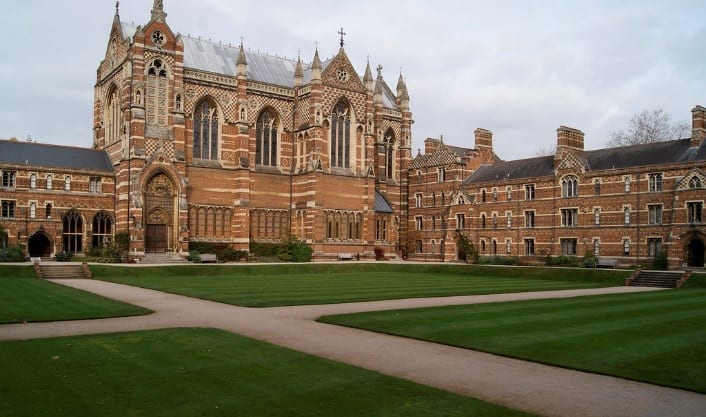
Length: 6 years
Admissions Test: BMAT (transitioning to UCAT in future cycles — check current requirements)
What Makes It Special: Oxford’s medical program is split into a pre-clinical phase (Years 1–3) and a clinical phase (Years 4–6). The first three years are deeply science-focused, with an emphasis on understanding the body at a molecular level. Students earn a BA in Medical Sciences before progressing to clinical years at Oxford’s affiliated hospitals.
International Support: Oxford offers extensive orientation, visa guidance, and a vibrant community of international students. The tutorial system provides personalized academic support, which is a unique feature of Oxford education.
University of Cambridge – Deep Science Meets Rigorous Clinical Training
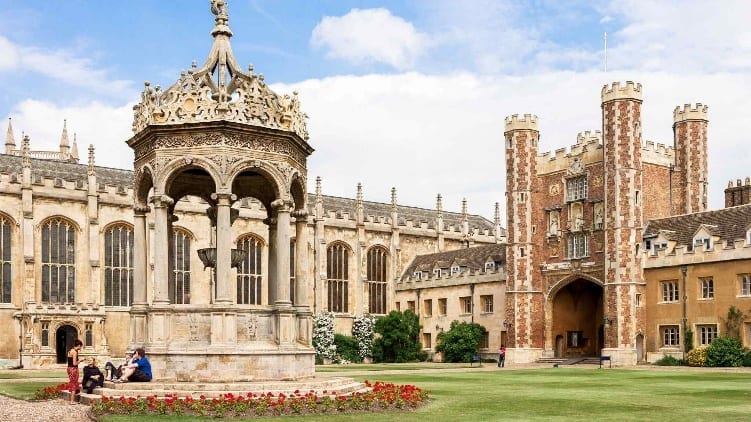
Length: 6 years
Admissions Test: BMAT (may change — always confirm current entry tests)
What Makes It Special: Cambridge emphasizes a research-led approach, starting with three years of intense scientific study, culminating in a BA degree. The final three years involve full-time clinical training at top NHS hospitals. It's ideal for students with a passion for science and a methodical approach to learning.
International Support: With a selective but supportive admissions system, Cambridge welcomes academically outstanding international students and provides housing, mentorship, and language assistance through its colleges.
Imperial College London – London’s Leading Research-Focused Medical School
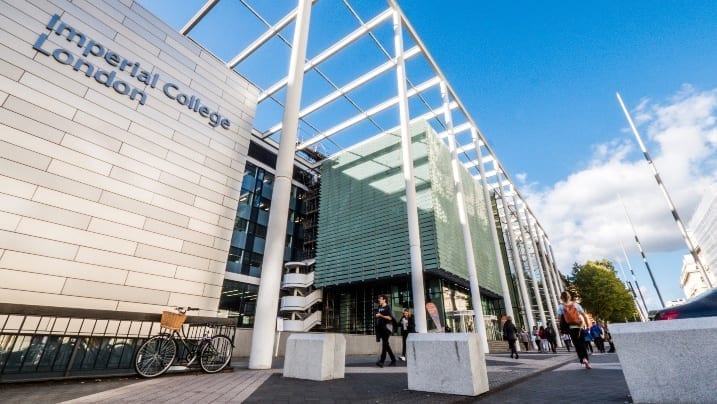
Length: 6 years
Admissions Test: UCAT
What Makes It Special: Imperial blends early patient contact with strong scientific foundations. Students complete an intercalated BSc in Year 4, gaining research skills before returning to clinical rotations. It’s one of the few programs that balances clinical training and innovation this early.
International Focus: Imperial is home to students from 130+ countries. International students benefit from dedicated societies, mentorship schemes, and access to global health placements.
King’s College London – Patient-Centered and Globally Minded
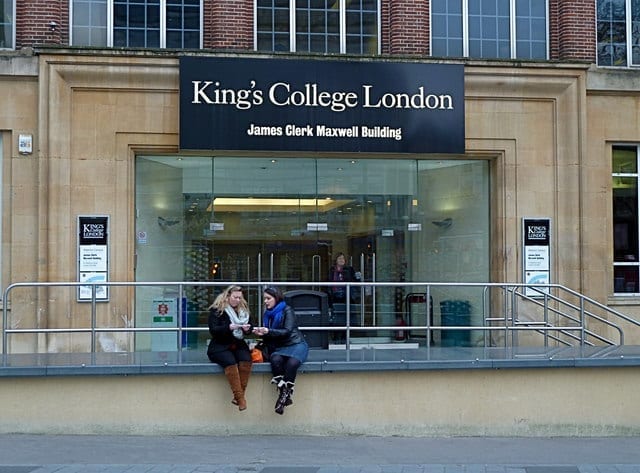
Length: 5 or 6 years (depending on whether you take a foundation year or intercalated BSc)
Admissions Test: UCAT
What Makes It Special: With strong NHS partnerships, King’s offers early and frequent clinical placements, even in Year 1. It also emphasizes communication and empathy alongside scientific skills, ideal for students who want a human-centered approach to medicine.
International Support: King’s has one of the largest international medical student populations in the UK and offers housing support, cultural integration programs, and guidance from the King’s Global Mobility Office.
University College London (UCL) – Big City, Big Opportunities
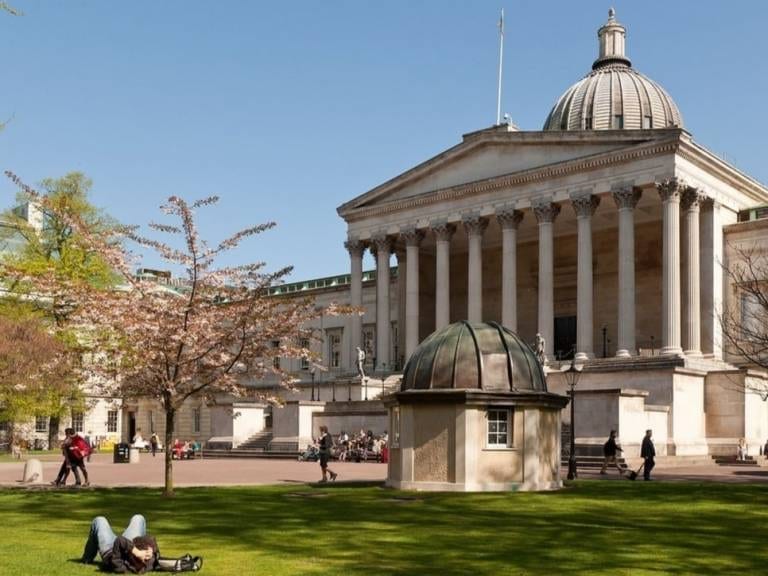
Length: 6 years
Admissions Test: UCAT
What Makes It Special: UCL offers a broad and flexible curriculum, with options to intercalate or even study abroad. It's ideal for students with a wide range of interests as you’ll start clinical exposure early, but also engage in modules like medical humanities, ethics, and leadership.
International Support: UCL has a dedicated international office and a wide array of student-led societies. It’s also based in central London, giving you access to world-class hospitals and research centers.
University of Edinburgh – Historic Excellence in a Modern Setting

Length: 6 years
Admissions Test: UCAT
What Makes It Special: Edinburgh offers a spiral curriculum that gradually builds knowledge year by year. You’ll benefit from a supportive learning environment, and training at the Royal Infirmary of Edinburgh — one of Europe’s leading teaching hospitals.
International Support: The university has a long tradition of welcoming international students and offers guidance on visas, housing, and adapting to life in Scotland.
University of Manchester – Research-Led with a Personal Touch

Length: 5 years (6 with intercalated degree)
Admissions Test: UCAT
What Makes It Special: Manchester uses a problem-based learning (PBL) approach that encourages teamwork and real-world problem solving. You’ll also experience clinical placements from Year 1 with opportunities to train in both urban and rural healthcare settings.
International Focus: Manchester has a robust international student support system, and it’s known for being a welcoming and affordable city for international learners.
Your Success Tips from Zenith
1. Start Early: The earlier you start preparing for the UCAT/BMAT tests and gathering medical experience, the better. It’ll give you plenty of time to build your skills and confidence!
2. Craft Your Personal Statement: This is your chance to shine! Make sure to highlight your passion for medicine, share your experiences, and show your understanding of the challenges in the field.
3. Practice for Interviews: Interviews can feel daunting, but with some practice, you'll be ready! Focus on ethical questions and scenarios to help you feel more confident.
4. Get Great References: Don’t underestimate how valuable it is to have references from teachers who really know you. They can provide insights and support that can make a big difference!
5. Connect with Current Students: Reach out to current medical students or alumni. They often have great insights and tips to share. Many universities have societies or mentorship programs that can connect you with them.
How Zenith Education Can Help
Navigating UK medical school admissions can be tough, especially as an international student. Zenith Education provides expert guidance on:
- Selecting the right universities and programs
- Preparing for UCAT/BMAT with tailored coaching
- Writing compelling personal statements and essays
- Interview preparation with mock sessions
- Visa and financial advice
Ready to start your journey to becoming a doctor in the UK? Zenith Education is here to support you every step of the way!
Next step
Planning a bachelor's application?
We support students from the first "what should I study?" to the day they arrive on campus, with strategy, application expertise, and global university insight.
See bachelor's guidanceWant to find out more?
Message us on WhatsApp for a quick answer, or book a free consultation. No pressure either way.