
AI & Careers
The Invisible Hand of AI in Politics & International Relations
Artificial Intelligence (AI) is changing how global politics and international relations work. It affects how governments make decisions, how diplomats communicate, and even how countries handle security.
By the Zenith Education team
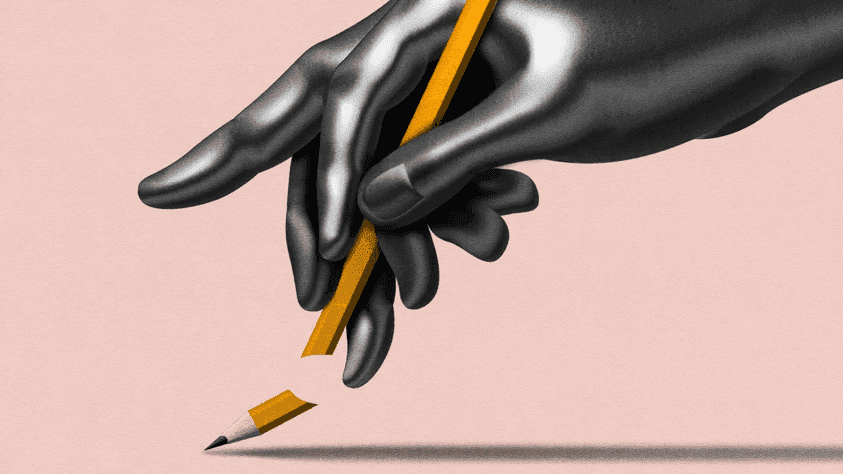
Artificial Intelligence (AI) is changing how global politics and international relations work. It affects how governments make decisions, how diplomats communicate, and even how countries handle security. To succeed in this evolving world, people need a mix of traditional knowledge and tech skills. This guide explores how AI is shaping this field — and how students can prepare for future careers in it.
AI and the Future of Work
What’s Coming in the Next 15 Years?
- In 5 years: AI will improve many industries (like healthcare and manufacturing), making work faster and more efficient.
- In 10 years: Many routine jobs may disappear, but new tech-focused roles will grow (like data scientists).
- In 15+ years: AI might help make complex decisions alongside humans, blending our creativity with machine power.
Key Point: The future job market will require people who are adaptable, tech-savvy, and ethically responsible.
How AI Is Used in Politics and Diplomacy
Smarter Decision-Making
- AI can predict problems like disease outbreaks or financial crises by spotting patterns in data.
- Example: HealthMap finds early signs of epidemics using news and health reports.
- AI helps governments test policies through simulations — reducing mistakes and delays.
- Example: Some countries use AI to test tax changes before making them real.
AI in Diplomacy
- AI tools like chatbots help with visas and passports, making consular services faster.
- Example: The “Diplomat Bot” reduced wait times by 25%.
- AI monitors global banks for illegal money flows and watches for fake news and deepfakes.
- AI also helps track disease spread and manage vaccine deliveries in international partnerships.
Modern AI Tools in Global Politics
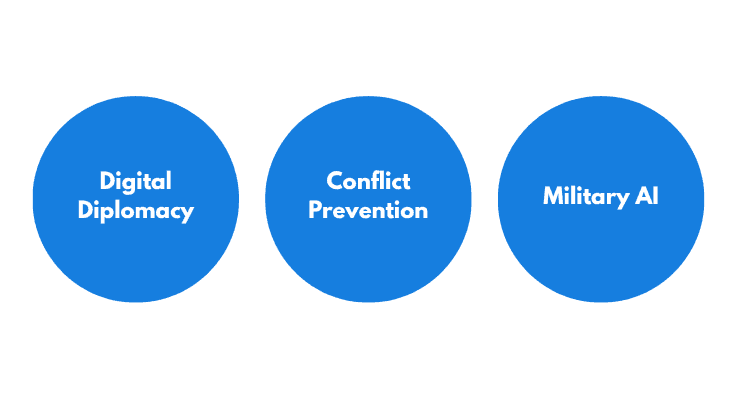
Digital Diplomacy
- Diplomats use AI to track public opinion and adjust their messages.
- AI tools analyze social media and news to help ambassadors know what to say.
- In the future:
- AI may help draft treaties and run virtual negotiation rooms.
- AI “ambassadors” could handle low-level meetings.
Conflict Prevention
- AI spots early signs of conflict using satellite images, social media, and local news.
- Example: In Kenya, AI reduced response times from weeks to days.
- By 2040, AI may manage peacekeeping tasks like monitoring ceasefires or refugee flows.
Military AI and Ethics
- The UN has started guiding how countries should use AI responsibly — especially in military settings.
- 31 countries have signed an agreement to avoid dangerous uses of military AI.
- In the future, we might see international treaties limiting autonomous weapons.
Careers and Skills in the AI-Powered World
New Jobs in International Affairs
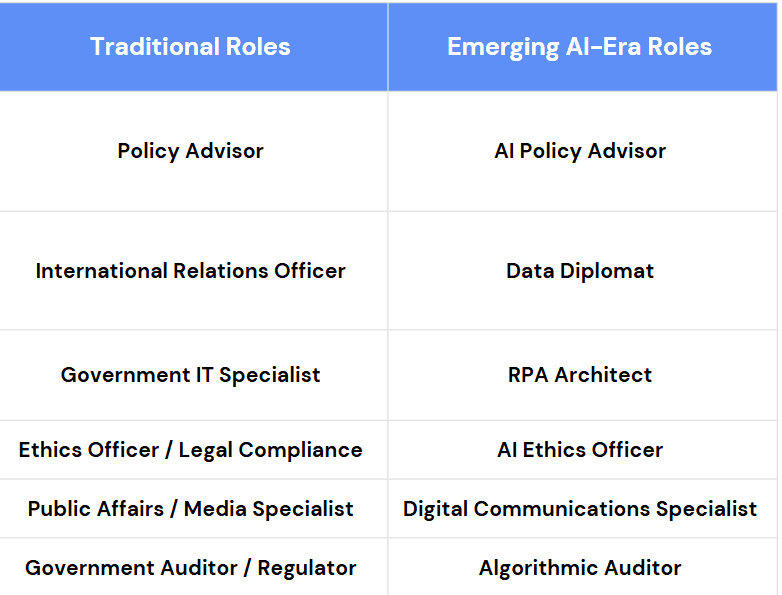
- AI Policy Advisor: Helps create laws and treaties about AI.
- Data Diplomat: Manages how countries share data and set AI rules.
- RPA Architect: Designs software to automate government tasks (like visas).
- AI Ethics Officer: Makes sure AI is used fairly and transparently.
- Digital Communications Specialist: Uses AI to shape public messages and fight disinformation.
- Algorithmic Auditor: Reviews AI systems to make sure they follow rules and don’t show bias.
Skills You’ll Need
- Tech skills: Know statistics, programming (like Python), and how AI works.
- Policy knowledge: Understand how laws apply to AI and data privacy.
- Soft skills:
- Clear writing and speaking
- Cultural awareness
- Project management and teamwork
Education and Training
- Many universities now offer degrees that combine AI, politics, and law.
- Example: LSE (London School of Economics) has programs that explore how AI affects society.
- Online courses and workshops can teach skills like digital diplomacy.
- Government institutions are training their diplomats in AI and cybersecurity.
- Example: The U.S. Foreign Service Institute trained 180+ diplomats since 2022.
Ethical Concerns and Challenges
AI can be helpful, but it also comes with serious risks.
Bias and Fairness
- AI systems might reflect human biases if trained on unfair data.
- Problem: This could affect decisions about aid, immigration, or security.
Transparency
- Sometimes we don’t know how an AI system made a decision — this is the “black box” problem.
- This makes it hard to hold people accountable.
Privacy and Surveillance
- AI can collect and analyze personal data — raising concerns about privacy.
- Risk: Some governments may use AI tools to spy on people or limit free speech.
Military Misuse
- Civilian AI tools (like language models) can be turned into weapons or tools for spreading lies.
- Example: AI is already being used in modern conflicts, raising alarm.
What’s Needed?
- Strong global rules and agreements
- Fair and transparent audits of AI systems
- Conversations between governments, tech companies, and the public
Conclusion
AI is already transforming how countries make decisions, prevent conflict, and interact with each other. It offers amazing possibilities — but also big challenges. To make the most of AI in politics, we need:
- Smart and ethical professionals with both tech and people skills
- Clear international rules and cooperation
- A strong focus on human values and fairness
Final Thought: If you’re a student interested in politics, technology, or global affairs, learning about AI could open the door to exciting and important careers in the future.
Want to find out more?
Message us on WhatsApp for a quick answer, or book a free consultation. No pressure either way.